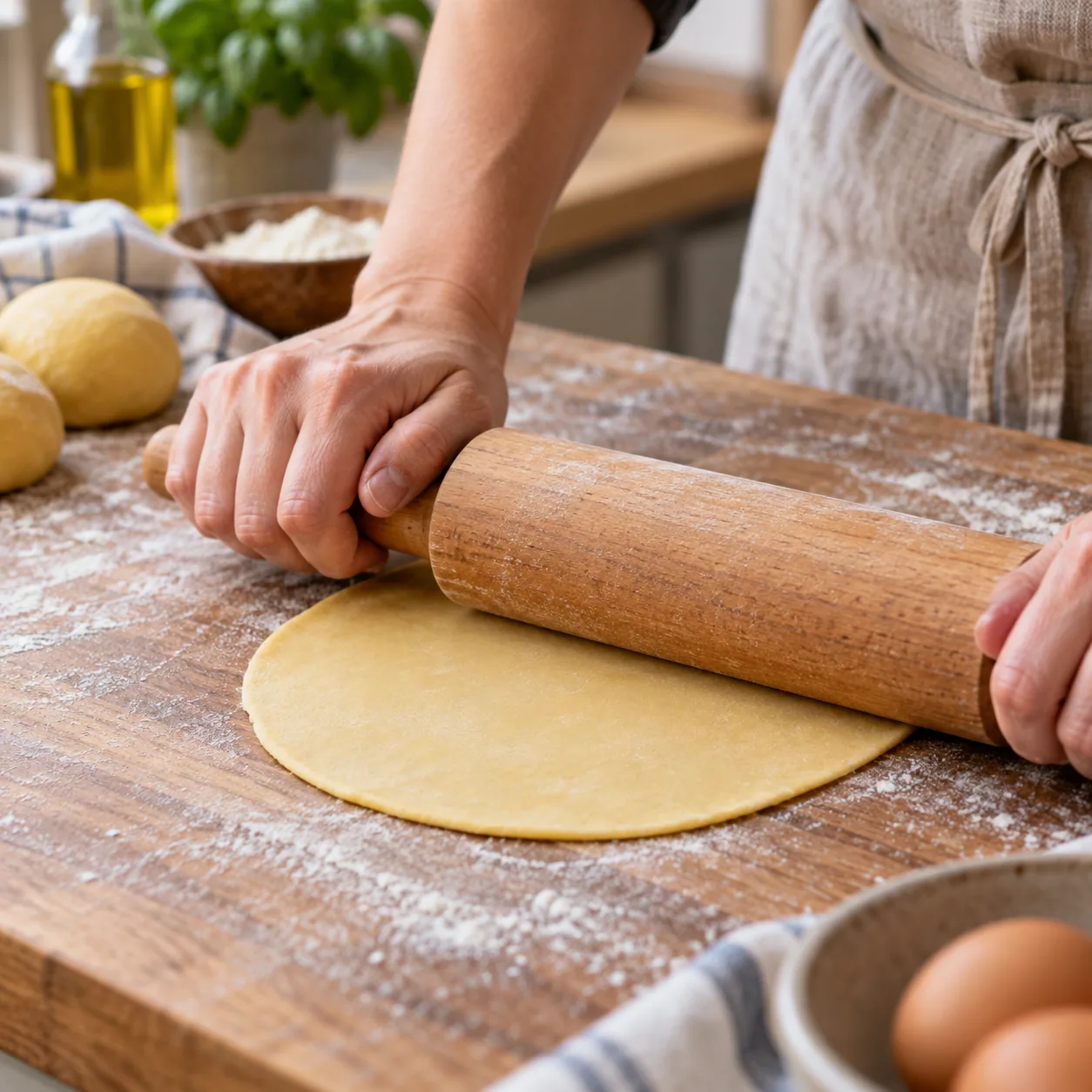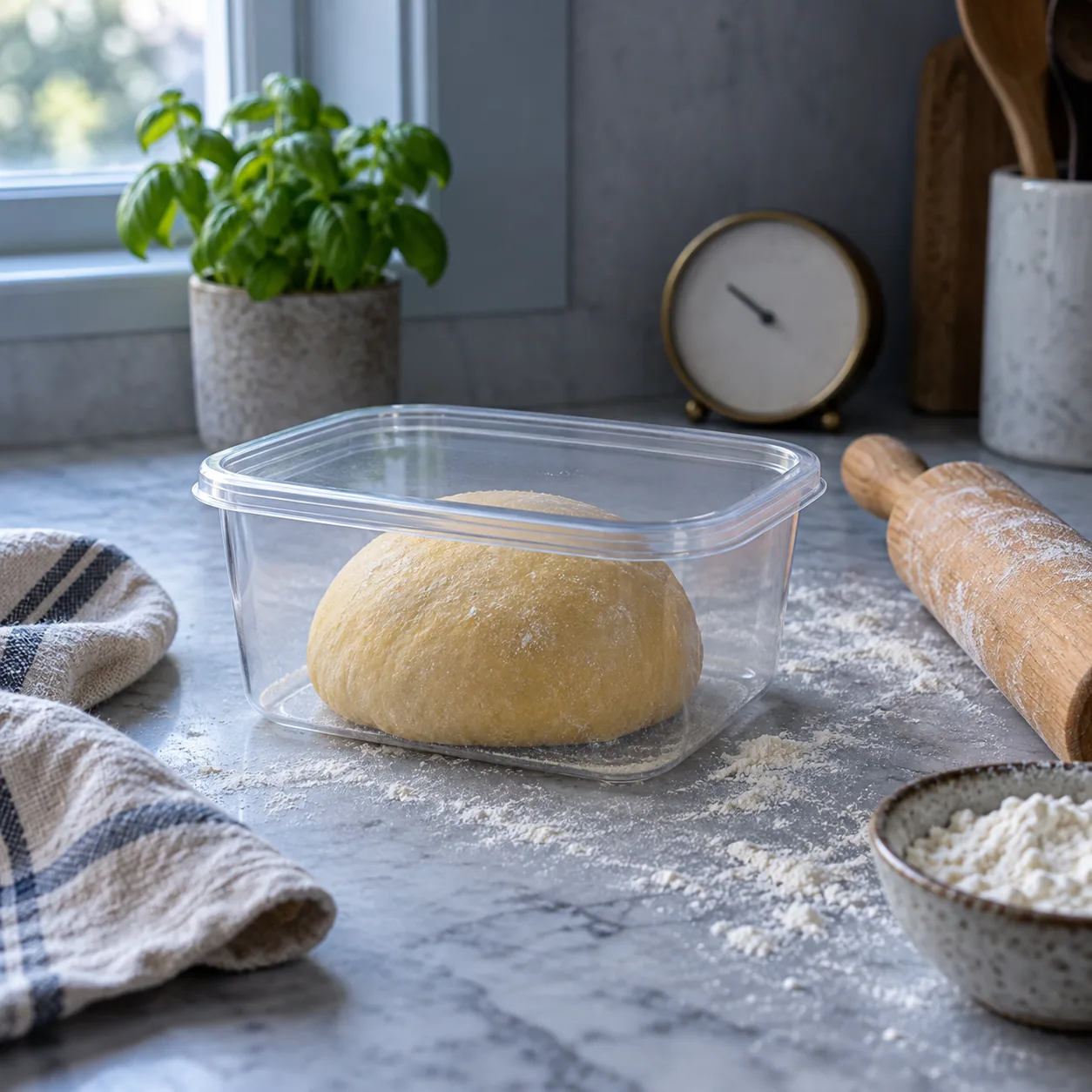
A covered rest is a scheduled step in a pasta recipe, not a universal repair for every stiff or crumbly dough. It keeps the surface from drying while the dough sits, and a well-matched recipe may become easier to roll after that pause. Use the time and temperature in the recipe you are actually following, then judge the dough again before changing its hydration.
What the rest can—and cannot—tell you
King Arthur Baking’s fresh egg pasta class formula directs cooks to wrap or cover the dough and rest it at room temperature for 20 to 30 minutes. Its eggless durum recipe uses a different formula and a 15-to-20-minute covered rest. Those examples show why a single number should not be detached from its recipe: flour, liquid, dough style, and later shaping method differ.
The eggless instruction also describes the rest as allowing developed gluten to relax. For a home cook, the useful observation is practical rather than microscopic: after the specified rest, does a small piece flatten with less spring-back and without a dry skin?
A rest will not correct a missed egg, a large weighing error, or flour added far beyond the formula. If the dough is still loose dry flour that cannot be pressed into a mass, return to the recipe’s mixing and adjustment instructions. Do not expect a timer to replace that check.
Cover the dough, not just the bowl nearby
Air exposure changes the test. King Arthur’s hand-pasta instructions keep the dough covered during its rest and keep unused portions covered during shaping so they do not dry out. Use the covering method specified by your recipe—such as an overturned bowl, wrap, or a closed container—and protect every portion that is not under the rolling pin.
This matters because a dry outside and a firm center can look like one hydration problem even though the surface changed while it waited. Work away from a fan or strong draft, uncover one portion, and leave the rest protected.
A four-step check after resting
- Read the recipe again. Confirm its rest time, temperature, and whether refrigerated dough must warm before rolling.
- Press a small piece. Look for a cohesive interior and a surface that bends without flaking away.
- Make a few gentle rolling strokes. If the piece immediately pulls back, cover it again and follow any additional-rest guidance in that recipe.
- Separate rest problems from formula problems. Persistent loose flour, extreme stickiness, or a missed ingredient calls for a recipe check, not an indefinitely longer pause.
Do not keep adding bench flour simply to make a rough ball look smooth. Extra flour changes the dough you are trying to assess. Likewise, do not add liquid only because a particular dough feels firm: King Arthur’s eggless hand-shaped dough is intentionally stiff, and its instructions warn that excess water can make shapes hold less well.
Fit the pause into a safe workflow
Use the covered rest to clean the raw-flour area, prepare the rolling space, and organize the sauce. The FDA notes that flour is a raw food and that cooking is the step that kills harmful bacteria; wash hands, bowls, and work surfaces after contact with raw dough, and do not taste it uncooked.
For dough containing raw egg, follow the recipe’s storage directions and ordinary egg-safety guidance rather than extending a room-temperature rest at will. USDA guidance says refrigerated eggs and egg-containing foods should not be left out for more than two hours, or more than one hour when temperatures are above 90°F/32°C. A recipe’s normal covered rest fits inside a larger safe-handling plan; it does not suspend it.
The simplest record for a future batch is the recipe used, the stated rest, the covering method, and how the first test piece rolled. That creates a useful comparison without claiming that one rest time works for all pasta doughs.
This article is an evidence-based editorial guide and has not been verified through a Pasta By Hand kitchen test.