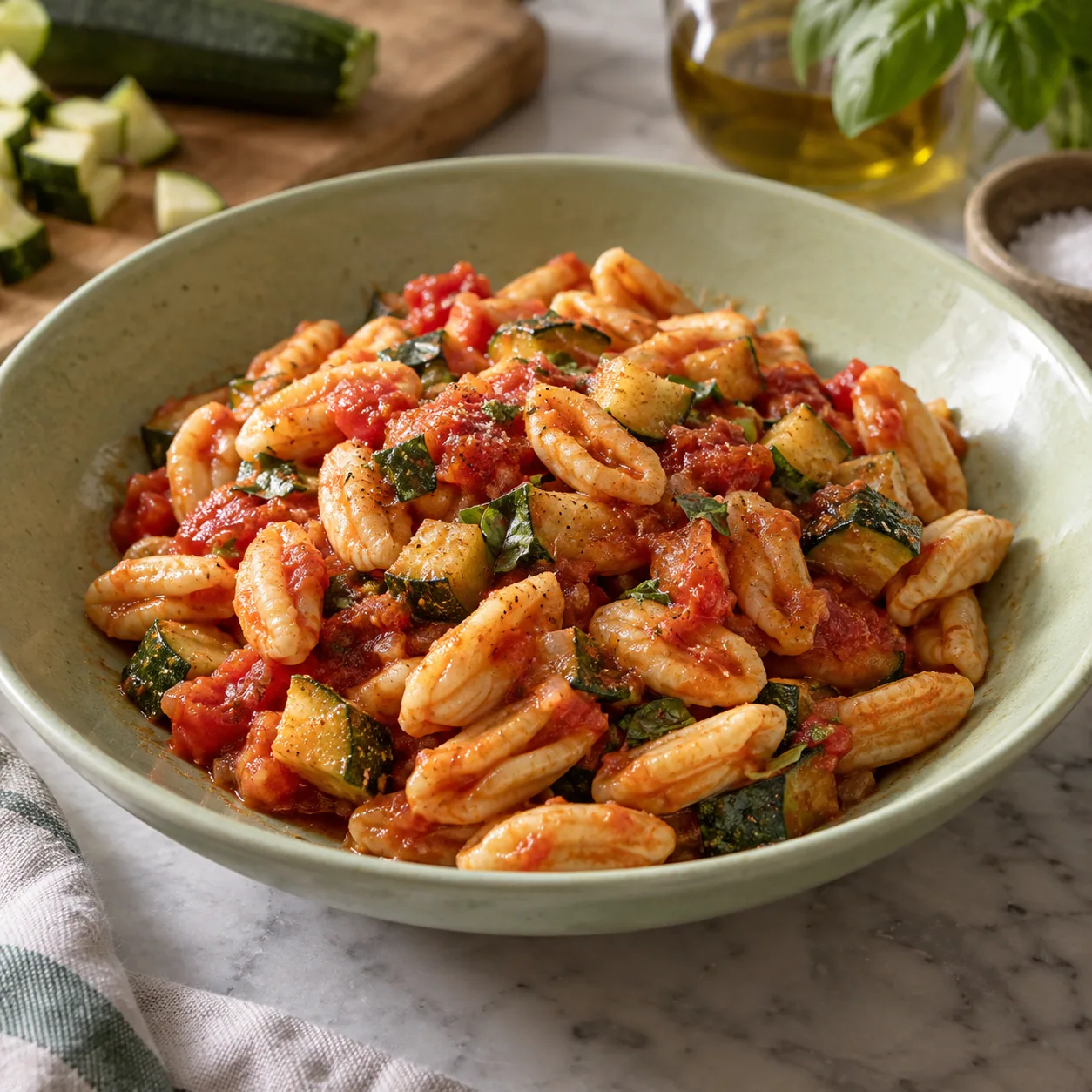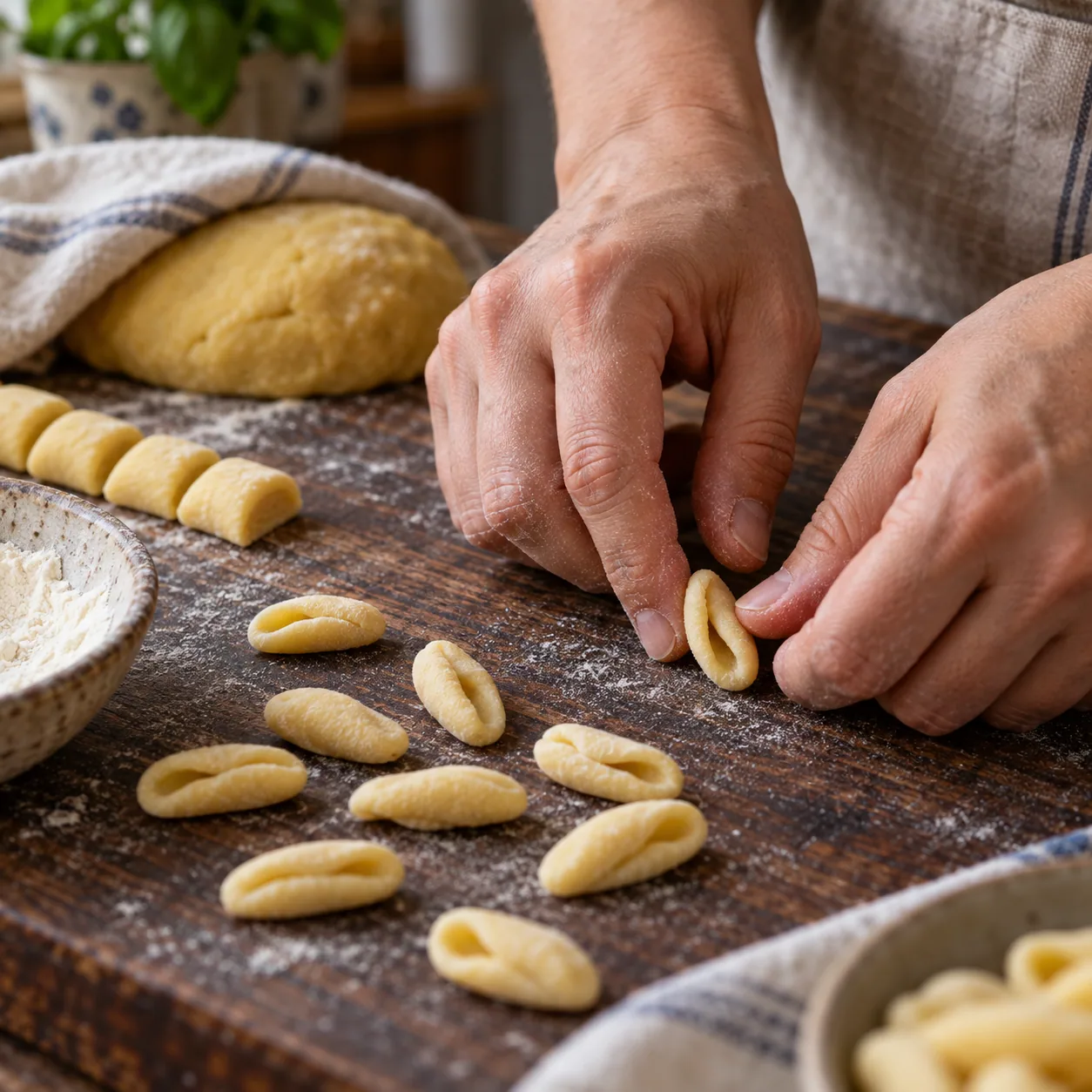
To practice cavatelli by hand, start with a firm eggless pasta dough made for hand-shaped pasta. Roll one rope, cut only six small pieces, then press and drag each piece toward you with two fingers so it curls into a hollow. Compare those first shapes before cutting the rest of the rope.
Start with a dough intended for the shape
King Arthur Baking’s Eggless Pasta Dough uses durum flour, hot water, and salt and identifies cavatelli as one of the shapes it suits. Follow that complete recipe—including its kneading and covered rest—rather than applying the shaping directions to an unrelated soft sheet-pasta dough.
Keep the portions you are not shaping covered. In King Arthur’s hand-pasta video, exposed dough begins to dry and form a skin, making shaping more difficult. A covered bowl or the covering method in your chosen recipe protects the waiting pieces while you practice.
Make a six-piece practice row
King Arthur’s hand-shape guide rolls its eggless dough into a rope about 1/2 inch in diameter, then cuts a small group of roughly 1/2-inch pieces before shaping. Those dimensions belong to that formula and guide; if you use a different tested cavatelli recipe, use its measurements instead.
For the King Arthur dough:
- Roll one portion into an even rope using pressure across both hands.
- Cover the part of the rope you are not using.
- Cut six pieces from the exposed end.
- Move the knife or bench scraper aside before your fingers begin shaping.
Six pieces are enough to see whether the rope is even and whether your movement is repeatable. There is no advantage in cutting the entire rope before you know that the dough and board are working together.
Press, drag, release
Place your index and middle fingers together on the far side of one piece. Press into the dough and pull your fingers toward you along the work surface. The piece should curl as it travels, leaving a hollow rather than staying as a flat pad.
Look at the six results as a row:
- If the pieces differ mainly in overall size, make the rope and cuts more consistent.
- If several pieces stay flat, repeat the press-and-drag movement before increasing force.
- If the outside has dried, cover the remaining dough and return to the source recipe’s handling guidance.
Do not add water merely because this dough feels firm. The King Arthur video explains that its hand-shaped dough is intentionally stiff and warns that excess water can make shapes hold less well.
Keep finished pieces separate
Transfer shaped pieces to the prepared tray as the recipe directs, leaving enough space that they do not touch. Continue in small groups: uncover part of the rope, cut, shape, and move the pieces to the tray. This rhythm protects the unshaped dough and keeps a mistake from affecting the whole portion.
For cooking, follow the dough recipe rather than a universal cavatelli time. King Arthur’s eggless recipe gives a 3-to-5-minute range for the pasta made from that formula and instructs the cook to look for a slight bite. Shape thickness varies by hand, so begin checking within the recipe’s range instead of using floating as the only signal.
The first six pieces are a shaping checkpoint, not a controlled kitchen experiment. Pasta By Hand has not kitchen-tested this workflow, and the illustrations do not document a tested batch.