Use a named method rather than improvising anonymous dough cylinders. This guide uses King Arthur Baking’s strozzapreti workflow: roll one quarter of its eggless dough into a thin sheet, cut a 3/4-inch strip, stretch that strip narrower, roll one segment between your palms, and snap off each short twist before continuing down the strip.
The result is a short, roughly spiraled ribbon rather than a solid rope cut from a thick log. This guide therefore does not treat thick dough cylinders as equivalent to the demonstrated shape.
Start with the matching eggless dough
King Arthur’s Eggless Pasta Dough uses 400g durum flour, 200g hot water, and salt. It is kneaded for about 10 minutes until very smooth, then covered and rested for 15 to 20 minutes. The recipe specifically identifies hand-shaped, unfilled pasta as its use case.
Follow that complete formula for this worked example. Do not transfer the dimensions below to a soft egg sheet or another dough and assume it will handle the same way.
The shape guide divides the rested dough into four pieces of about 146g each, works with one at a time, and keeps the others covered. Prepare parchment lightly dusted with durum flour before shaping.
Make one strip the practice batch
For strozzapreti, the guide rolls one dough quarter into a roughly 8-by-9-inch oval about 1/16 inch thick. It then cuts long strips about 3/4 inch wide and gently stretches one strip to roughly 1/4 inch wide and 16 inches long.
Those measurements belong to King Arthur’s formula and demonstration. For the first practice round, stop after preparing one strip. You can complete the full method without leaving every strip exposed or accumulating a large pile before you know the palm motion.
Roll, snap, set down
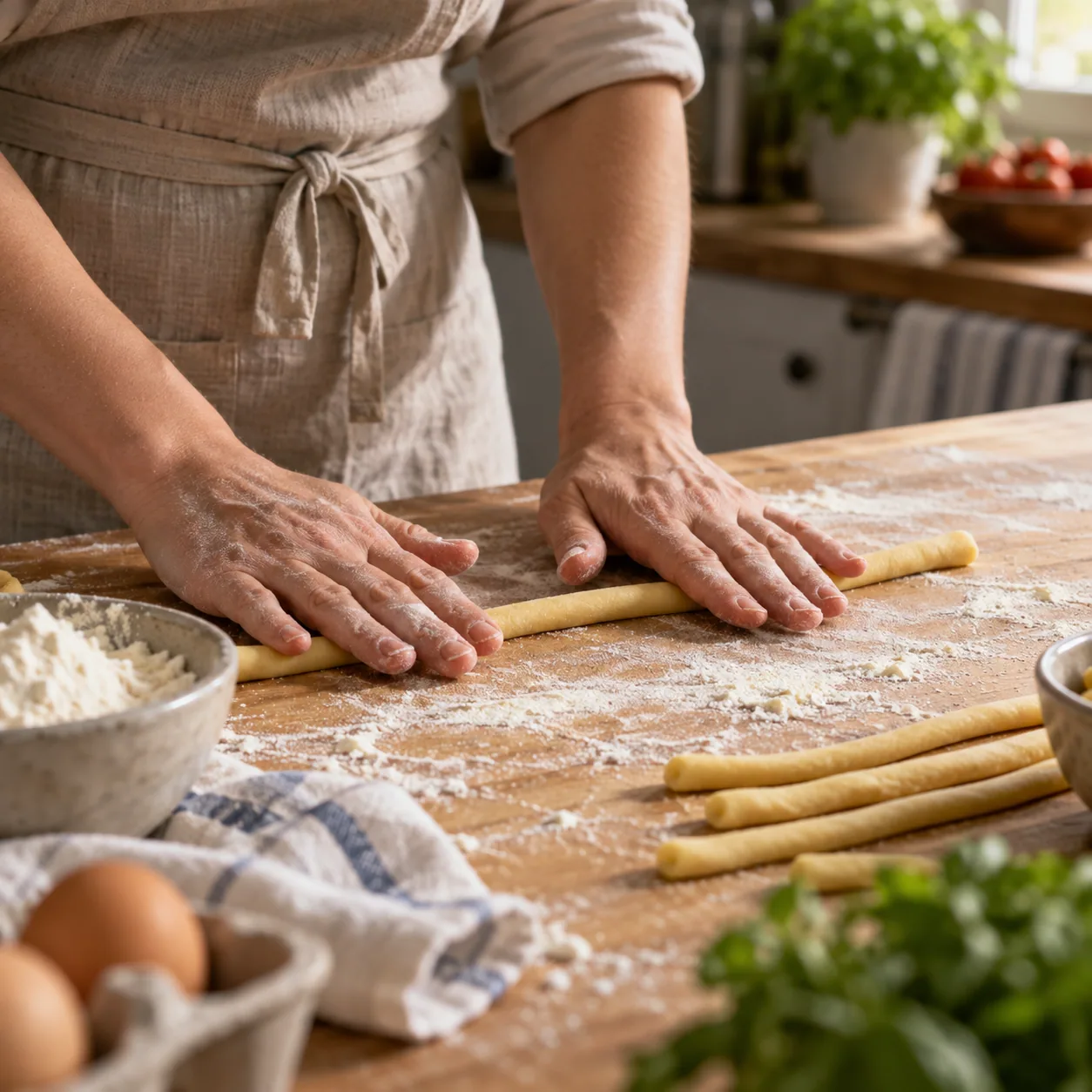
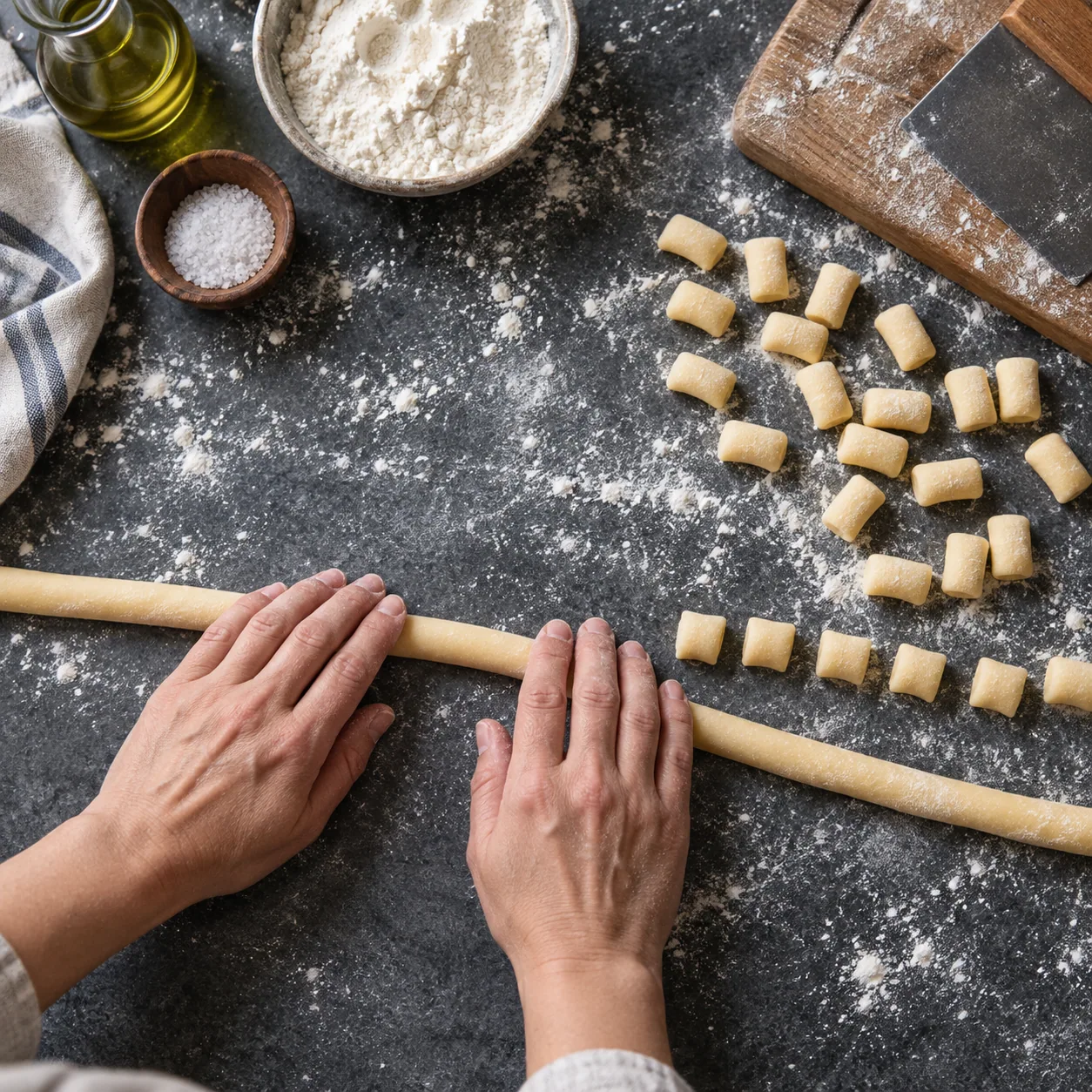
Hold the top segment of the strip between your palms while the remainder hangs below. Rub your hands back and forth in opposite directions a couple of times. When the segment appears rolled, snap it off with your fingers and place it on the prepared parchment. Continue down the same strip.
King Arthur describes each finished strozzapreto as a roughly spiraled ribbon about 2 to 3 inches long. Use the source dimensions as comparison cues:
- if a piece remains a flat 3/4-inch band, the strip was not stretched and rolled as directed;
- if it becomes a dense solid cylinder, return to the thin sheet-and-strip sequence rather than rolling a thick lump;
- if the segment shows a loose twist and remains separate on the tray, continue with the strip.
The guide suggests slightly clammy hands for useful friction and keeps a small bowl of cool water nearby. Use only that light hand-moisture cue; do not wet the pasta strip itself as an invented repair.
Decide whether to prepare another strip
Look at the first strip’s pieces before cutting the rest of the oval. They do not need to be mechanically identical, but the same thin strip and palm motion should remain recognizable across the group. If the first pieces are still flat or thick, repeat the worked strip before expanding the batch.
Once the motion is repeatable, shape the remaining strips and transfer pieces to the lightly dusted parchment without piling them together. Keep the unworked dough covered throughout.
Cook with the source formula
King Arthur’s shape guide rests the finished pasta for about an hour at room temperature, then cooks it in well-salted boiling water for 2 to 5 minutes before finishing it briefly with sauce. Its Eggless Pasta Dough recipe gives 3 to 5 minutes for the same base formula.
Treat the overlapping ranges as guidance for this formula and shape family, not a universal timer for any hand-rolled pasta. Follow the complete recipe, check the pasta within its range, and keep any future change—strip width, sheet thickness, or dough formula—to one variable at a time.
Pasta By Hand has not kitchen-tested this strozzapreti practice workflow. Its AI illustrations do not document the hand motion or a cooked batch.