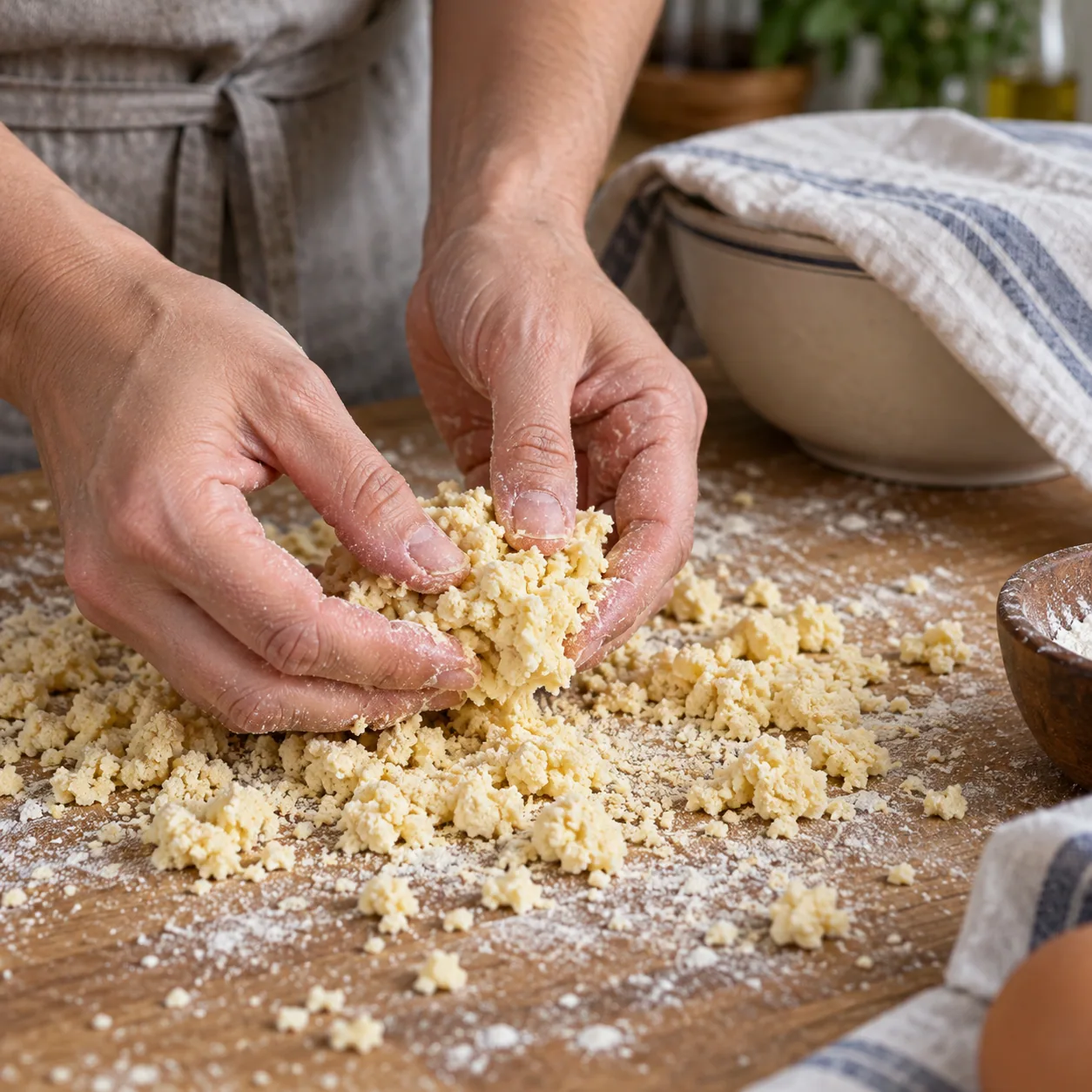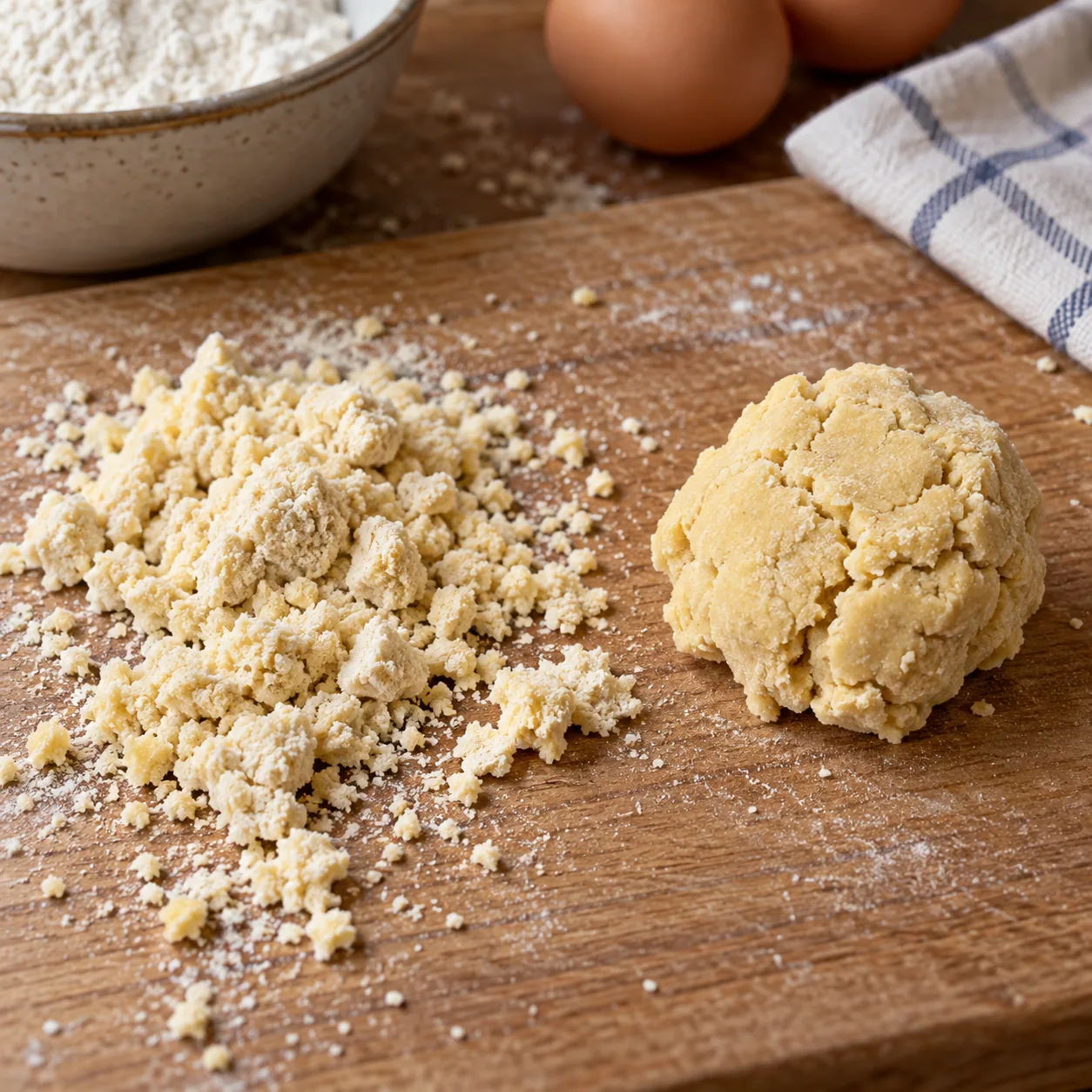
Do not add water just because pasta dough looks rough or feels firm. First identify the recipe, the shape it is designed to make, and the stage where the problem appears. A crumbly mixture during mixing, an intentionally stiff hand-shaped dough, a dry skin from exposure, and a sheet that cracks while rolling are not the same diagnosis.
First question: what texture does the recipe require?
King Arthur Baking’s general pasta guide explains that dough for rolled sheets is softer than dough intended for extrusion. Its eggless hand-shaped pasta recipe is stiffer still: the accompanying video specifically warns against automatically adding water because excess liquid can make the shapes hold less well.
That makes the recipe—not a photograph—the starting standard. Check that you used the stated flour, weighed the ingredients as directed, and did not accidentally count bench flour as part of the formula. If you substituted a flour or changed the shape, return to a tested formula before trying to invent a universal correction.
Diagnose the stage, then choose the next check
| When the symptom appears | What you can observe | Next check |
|---|---|---|
| During mixing | Loose material will not gather as the recipe describes | Recheck ingredient weights and the recipe’s own adjustment notes |
| After a covered rest | Dough is firm but cohesive | Compare with the intended shape; stiffness may be deliberate |
| After exposure to air | Outside is dry while the interior is more flexible | Improve coverage and protect unused pieces |
| During rolling | Edges crack or the sheet tears | Check whether the formula is meant for sheets, then check rest and rolling thickness |
The table is a triage tool, not proof of a cause. Change one thing at a time and keep a small unadjusted piece for comparison when practical.
If the mixture is still loose
Read the recipe’s exact mixing description. King Arthur’s eggless durum formula says its mixture will initially be crumbly and shaggy with some dry flour remaining before kneading brings it toward a smooth dough. That appearance is therefore not an automatic failure.
If your chosen recipe explicitly permits extra liquid, use its stated quantity and method. Do not borrow a spoonful or percentage from an unrelated pasta formula: egg size, flour, and intended shape can all differ. If the recipe gives no adjustment guidance and the measured mixture will not gather, the most reproducible option may be to restart with verified weights rather than create an undocumented rescue ratio.
If a cohesive ball develops a dry surface
Coverage comes before hydration changes. King Arthur’s hand-pasta instructions cover the dough during rest and keep unused pieces covered so they do not form a skin. Return protected portions to their cover as soon as possible and move away from a direct fan or draft.
Do not wet only the outside and assume the whole formula is corrected. Compare the protected interior with the exposed surface. If the interior remains workable, the useful lesson is about handling and coverage for the next portion.
If the sheet cracks during rolling
Confirm that the dough was designed for sheets. Then follow its specified rest and rolling directions, using a small portion while the rest remains covered. Avoid repeatedly adding dusting flour while troubleshooting a sheet that already seems dry.
If a correctly measured, recipe-matched dough still fails, record the flour, liquid weights, rest, and point of failure. That evidence is more useful for the next batch than claiming a rescue succeeded because the raw surface became smoother.
Know when to stop
Raw flour can carry harmful bacteria, and the FDA advises against tasting raw dough. Clean hands, tools, and surfaces after raw-flour contact and cook the pasta according to a reliable recipe. If the dough contains egg, keep the session within USDA egg-handling guidance; refrigerated eggs and egg foods should not remain at room temperature for more than two hours, or one hour above 90°F/32°C.
Discard a batch if food-safety limits have been exceeded. Otherwise, it is still reasonable to stop a low-confidence rescue and begin again with a measured formula. This guide does not provide a kitchen-tested universal rescue ratio, and Pasta By Hand has not kitchen-tested the diagnostic workflow.