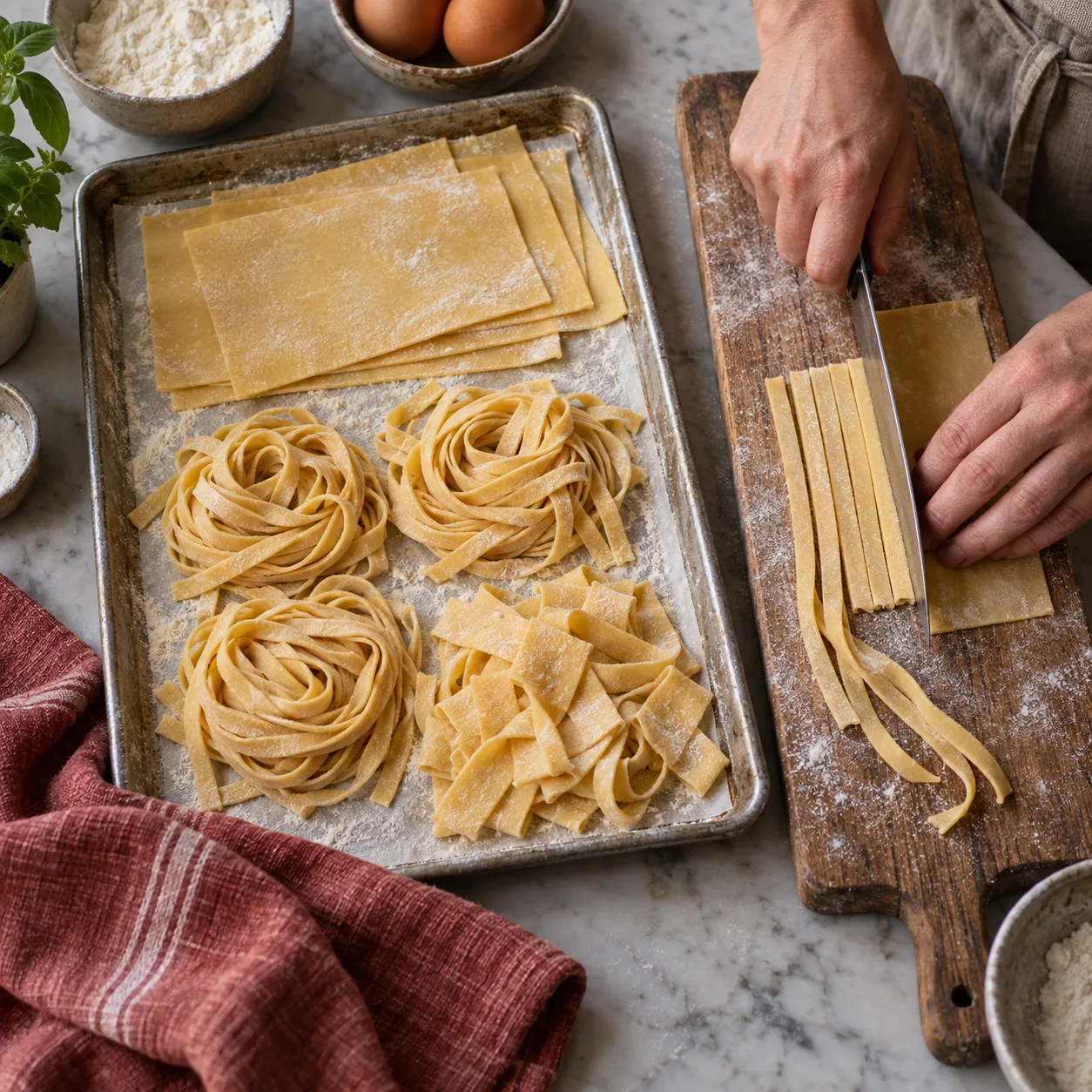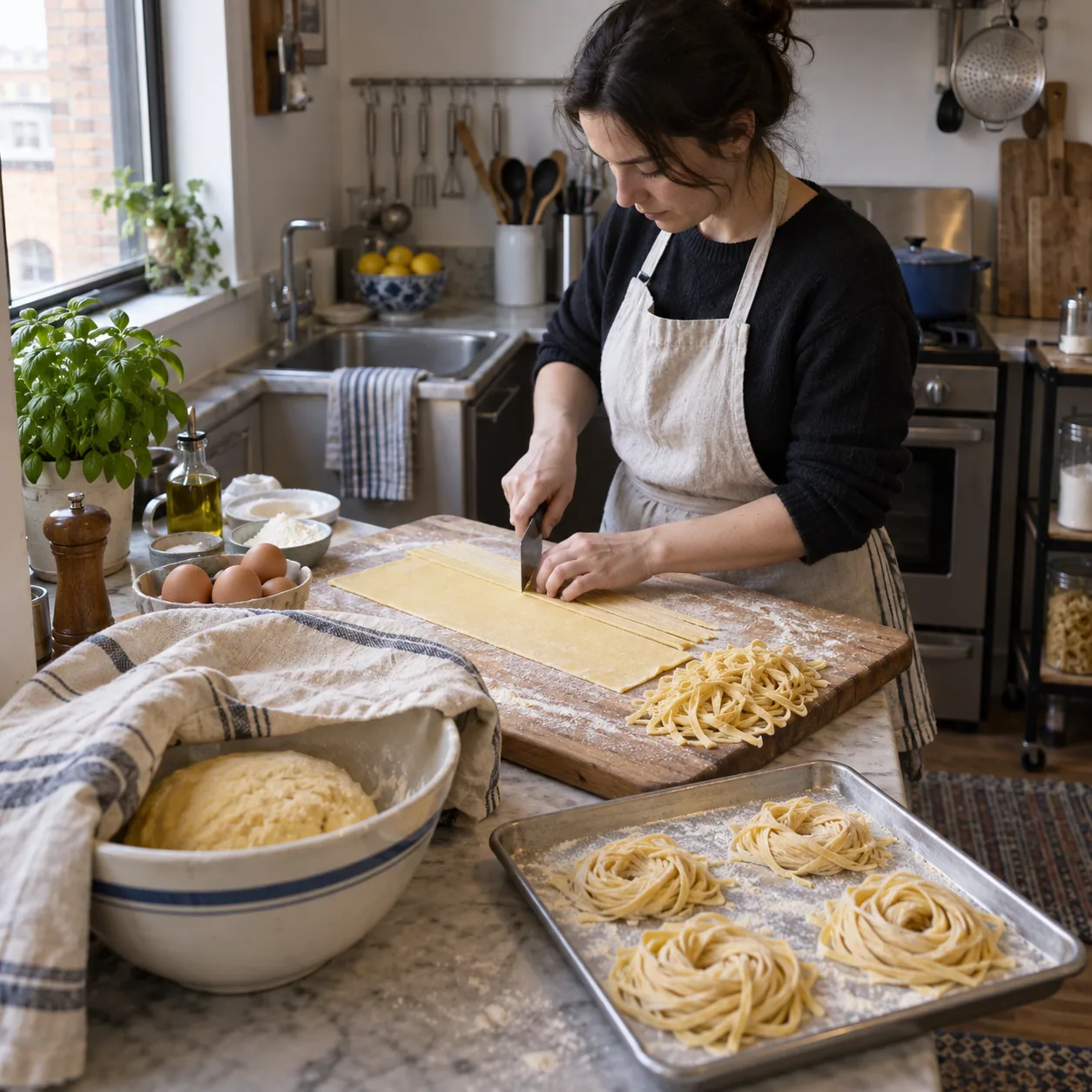
A small kitchen can support a first handmade-pasta session when each stage gets the counter in turn. The goal is not to fit flour, eggs, dough, a rolling pin, cut noodles, sauce, and serving dishes onto one surface at once. Set up one clear work zone, use a tray as temporary staging space, and reset before moving from raw ingredients to cooking.
This is a planning workflow, not a kitchen-tested recipe. Use it with a pasta recipe that provides its own ingredient, cooking, and storage directions.
Before mixing: reserve one stable work zone
Clear the widest stable, cleanable surface available. The rolling pin should be able to move without striking a kettle, dish rack, knife, or small appliance. A board should sit fully supported rather than rocking or hanging over an edge.
Put only the next-stage items within reach:
- the measured ingredients and mixing bowl;
- a covered container for dough portions;
- a rolling pin and suitable cutting tool;
- a clean tray for shaped pasta;
- soap, clean towels, and a clear route to the sink.
Packages, spare tools, phones, and serving dishes can remain elsewhere until needed. If the work zone cannot hold a large sheet safely, plan to roll smaller portions rather than forcing the batch to fit the counter.
During mixing: contain raw flour and egg
A bowl is a practical first choice on a narrow counter because it keeps the initial flour and egg mixture in one place. Weigh the ingredients required by the recipe, mix in the bowl, and move the dough to the work surface only when the recipe calls for kneading.
Raw flour and raw egg may contain harmful bacteria. The FDA advises against tasting uncooked dough. It also recommends washing hands, utensils, equipment, and work surfaces with hot, soapy water before and after contact with raw eggs or foods containing them.
Keep a cloth or utensil that touched raw egg away from ready-to-eat garnishes, tableware, and finished food. Clean the outside of the bowl if egg or wet dough reached it before moving the bowl into another work area.
During the rest: turn one tray into staging space
While the dough rests as directed by the recipe, reset the counter. Wash raw-egg tools and the work surface, then bring out only the rolling and cutting equipment.
Use a clean food-contact tray to hold the covered dough portions or the shaped pasta, keeping the stages visibly separate. A tray frees the main surface; it does not make perishable ingredients safe at room temperature. Follow the recipe and ingredient directions, and return perishable fillings or other refrigerated ingredients to the refrigerator promptly when they are not in use. USDA summarizes household food safety as Clean, Separate, Cook, and Chill.
If the tray has no safe resting place, shorten the batch or cook one portion before shaping more. Do not balance it on a burner, a hot appliance, an open drawer, or a surface needed for carrying boiling water.
During rolling: work one small piece at a time
Keep the unworked dough covered and roll only a portion that can turn comfortably on the available surface. A shorter sheet is easier to rotate without reaching into the sink or knocking another object from the counter.
Place the rolling pin down in the same clear location each time. Move cut pasta to the tray before starting the next portion. If a sheet becomes longer than the workspace can support, divide it before cutting the final shape. The meal does not depend on producing one continuous, oversized sheet.
When another person helps, assign a separate task—such as preparing serving dishes away from the rolling area—instead of having both people reach through the same narrow zone.
Before cooking: perform a full reset
Finish shaping, move the pasta tray away from the stovetop, and clear flour and raw-ingredient equipment before the pot becomes the focus. Prepare the sauce according to its recipe. The U.S. Consumer Product Safety Commission advises keeping loose items away from hot surfaces, remaining attentive while cooking, and turning pan handles inward to reduce spills.
Once pasta enters the pot, stop reorganizing the kitchen. Keep the route to the sink and serving area clear, and give cooking and draining your full attention. Detailed cleanup and note-taking can wait until the pot and burners are no longer active.
After the meal, record where congestion occurred. The next session may need a smaller rolled portion, earlier sauce preparation, a better tray location, or fewer tools—not a larger collection of equipment. Repeating the same simple sequence once or twice will reveal which constraint is real and which was only part of learning the workflow.